
Little Rock Directory Coverage
Little Rock people directories are not housed in one master search box. The city is the state capital and the Pulaski County seat, so useful directory work is spread across city department pages, Pulaski County offices, Arkansas state portals, schools, UA Little Rock, the library system, and archival collections. Some directories list current staff. Others list property owners, document parties, licensed professionals, registered agents, students from older yearbooks, or past residents from city directories.
| Directory | Who It Lists | Keeper | Access |
|---|---|---|---|
| Pulaski County department directory | County officials, offices, department heads | Pulaski County | Public web directory |
| City department pages | Little Rock officials and staff by division | City of Little Rock | Public web pages; no single citywide people directory found |
| Arkansas state employee directory | State agency workers | Arkansas.gov | State portal link noted in research |
| LRSD staff directory | School district staff | Little Rock School District | Search field, department filter, pagination |
| UA Little Rock directory | University employees and departments | University of Arkansas at Little Rock | People and Departments filters |
| Recorder and assessor indexes | Document parties and property owners | Pulaski Circuit/County Clerk and Assessor | Web portals plus courthouse research area |
| City directories and yearbooks | Past residents, addresses, occupations, students | CALS Roberts Library | Research room and in-library resources |
The best starting point depends on the clue. Use staff directories for a current public contact, education directories for school and campus names, the assessor roll for an owner tied to a parcel, and historical directories when a person lived in Little Rock before modern web databases. Public records as directories can be strong, but rules and copies belong with the record custodian. The broader access-law path is handled on Little Rock public records.
Little Rock Government Staff Directories
Government people directories around Little Rock are layered. Pulaski County's directory lists offices, named officials, addresses, email contacts, phone numbers, and fax numbers for many departments. The research found county examples such as the County Attorney, County Judge, Court Records, Election Commission, Human Resources, Coroner, Prosecuting Attorney, and Public Defender. That makes the county directory useful when a name is tied to a county office rather than a city agency.
| Pulaski County | Departments, named officials, office addresses, phone, fax, and email where posted. |
|---|---|
| City of Little Rock | Department-level pages, including Planning and Development pages with named zoning, code, and building contacts. |
| Arkansas.gov | State portal with a State Employee Directory link noted in the research, though the screenshot capture was blocked. |
| Municipal officials | Arkansas Municipal League directory may help, but current official city pages should be preferred for Little Rock officeholders. |
The City of Little Rock does not appear to publish one universal citywide employee directory. City staff contacts are more often embedded in department pages. Planning and Development, for example, publishes office contacts for zoning, permits, and code functions, and some division pages identify named staff. When a person is not listed, use the department's main contact first, then the records custodian if the question is about an official record.
Little Rock Education Directories
Little Rock School District's staff directory is one of the clearest current people directories for the city. It has a name search field, a department selector, page navigation, and staff cards. The manifest image below comes from the LRSD staff directory source.
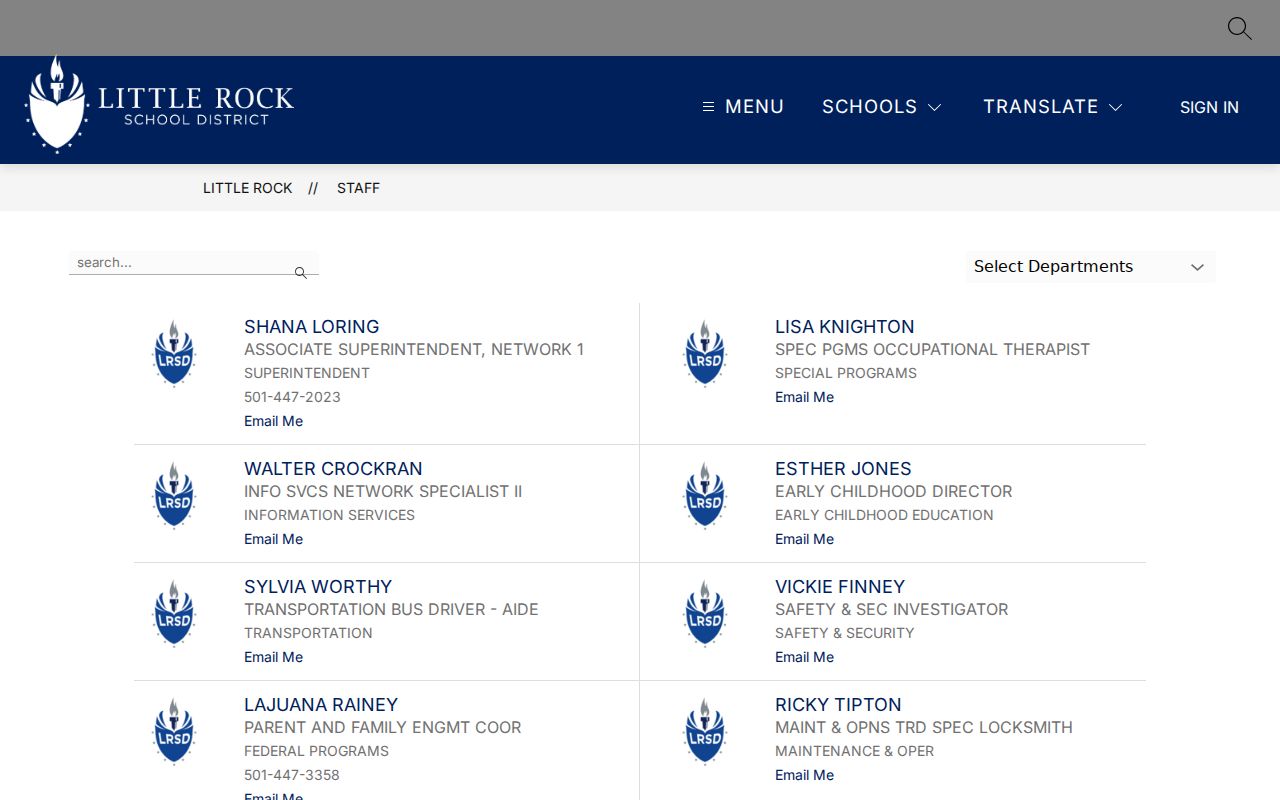
The LRSD directory is strongest when the searcher knows a school, department, or partial staff name. Some cards show phone numbers, while many show email and role information without a direct phone. That difference matters, because a directory card is a contact aid, not a full personnel record.
| Field Label | Type | Required | Notes |
|---|---|---|---|
| Search | Text | No | Filters by staff name. |
| Select Departments | Dropdown filter | No | Limits results by department when options load. |
| Page navigation | Pagination | No | Pages and Jump to Page controls were observed. |
UA Little Rock Directory Search
The UA Little Rock University Directory is broader than a simple staff list because it searches people and departments. It requires at least three letters for a directory query and offers People and Departments filters. The capture below shows the university directory source assigned to this people directories page.
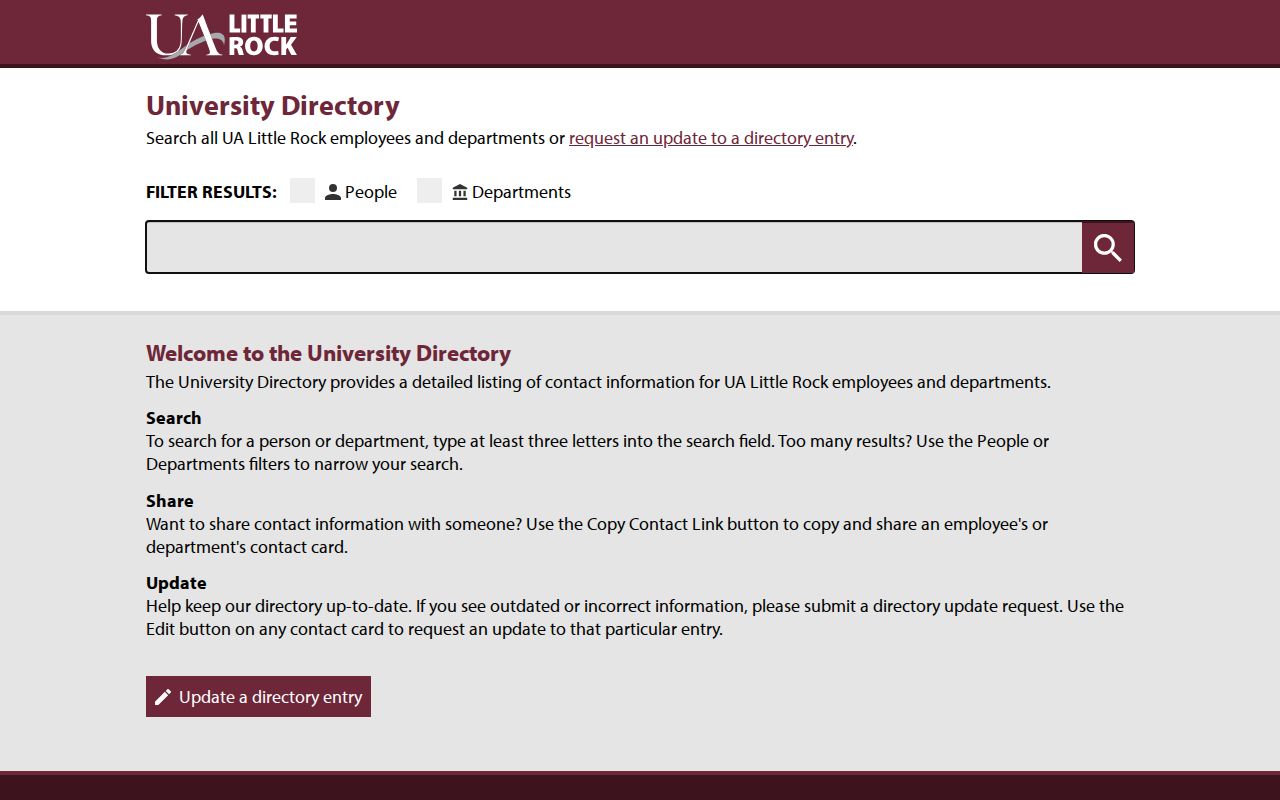
UA Little Rock entries can be useful for campus-linked people, offices, and departments. A person result can show name, title, email, office or room, and campus address. A department card can show room, email, phone, website, employee list, and a copy contact link. The directory also includes a way to request updates, which helps explain why campus contact data may change.
| Person entry | Name, title, email, office or room, and campus address where visible. |
|---|---|
| Department entry | Department name, room, email, phone, website, and employee list. |
| Search rule | Type at least three letters before searching the directory. |
| Directory controls | People filter, Departments filter, copy contact link, and update entry link. |
Little Rock Public Record Directories
Several public records work like people directories even when they are not labeled that way. The Pulaski deeds portal indexes grantors and grantees, which are the people or entities giving and receiving an interest in recorded documents. It can also find parties to liens, powers of attorney, notary bonds, UCC filings, and related instruments. The clerk says web review is limited to 1994 to present, while scanned land records back to 1819 can be reviewed in the research area.
The Pulaski County Assessor, ARCountyData Pulaski, and PAGIS Land Ownership Application act as owner and address directories. Assessor and GIS records can separate the situs address, meaning the parcel's physical location, from the mailing address used for notices. That split is often the key clue when an owner does not live at the property.
Insider tip: Property Fraud Alert advice about business and trust name variations also helps directory searching. Try Corp., LLC, Inc., living trust, revocable trust, initials, and name variants when deed or owner records do not match on the first pass.
Little Rock License Directories
Professional and business rosters add another directory layer. The research identified Arkansas.gov's license hub, the Arkansas Medical Board verification tool, the Nursing Board lookup, Arkansas Judiciary attorney search, the Arkansas Secretary of State business search, UCC search, and Pulaski County DBA filings. These sources are best for a name tied to a clinic, firm, registered business, professional office, or trade name.
The page image below comes from the Arkansas Medical Board license verification source assigned to Little Rock people directories.
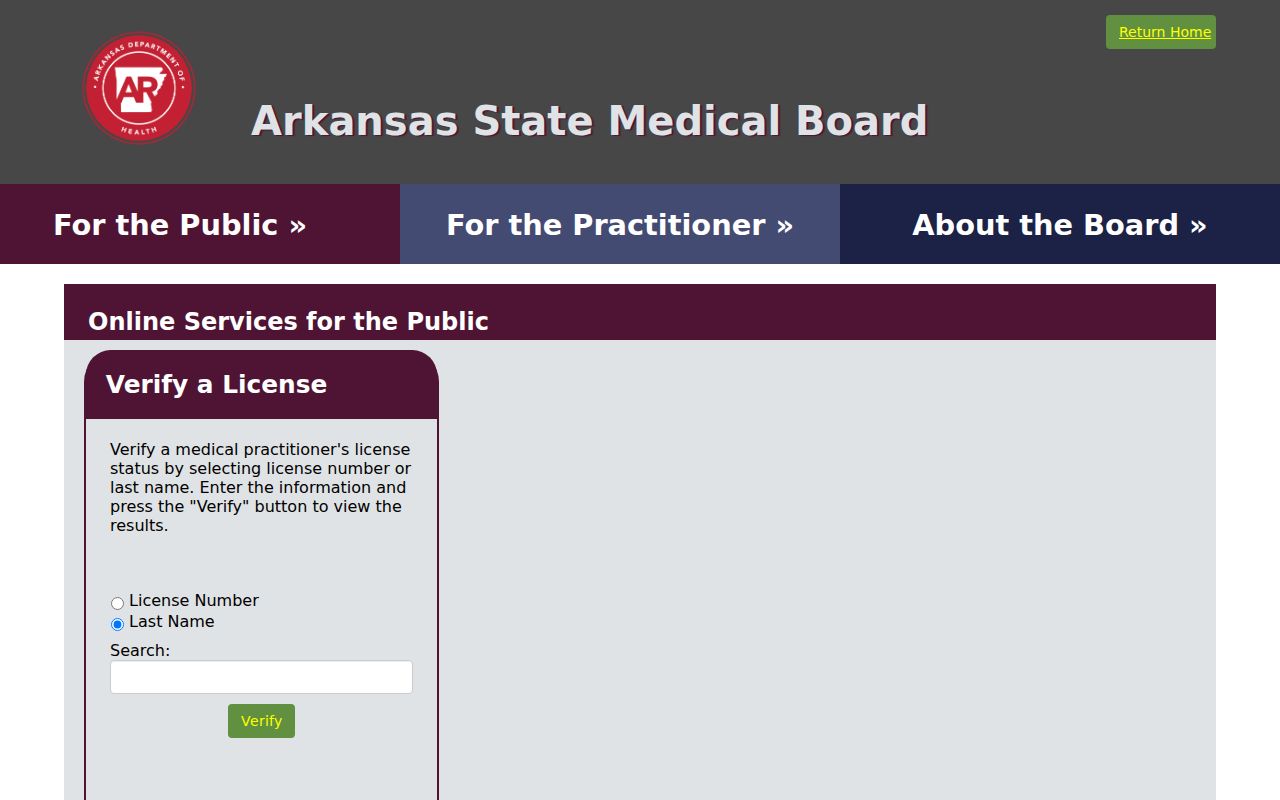
For business names, the Arkansas Secretary of State Business Entity Search can lead to entity names, registered agents, addresses, status, and filing details, depending on the entity. Pulaski County DBA records are searched through the deed portal because sole proprietorships and general partnerships file fictitious names locally when they use a name other than the owner's name.
Roberts Library Directory Collection
Historical Little Rock people directories are strongest at CALS and Roberts Library. CALS genealogy tools include in-library Ancestry Library Edition access for obituaries, burial notices, church records, immigration files, census data, historical maps, and other genealogy resources. Roberts Library's city-directory and yearbook article says the Research Room has an extensive city-directory collection, primarily covering Little Rock, plus other Arkansas cities.
The Roberts Library source image below is tied to its city directories and yearbooks research article.
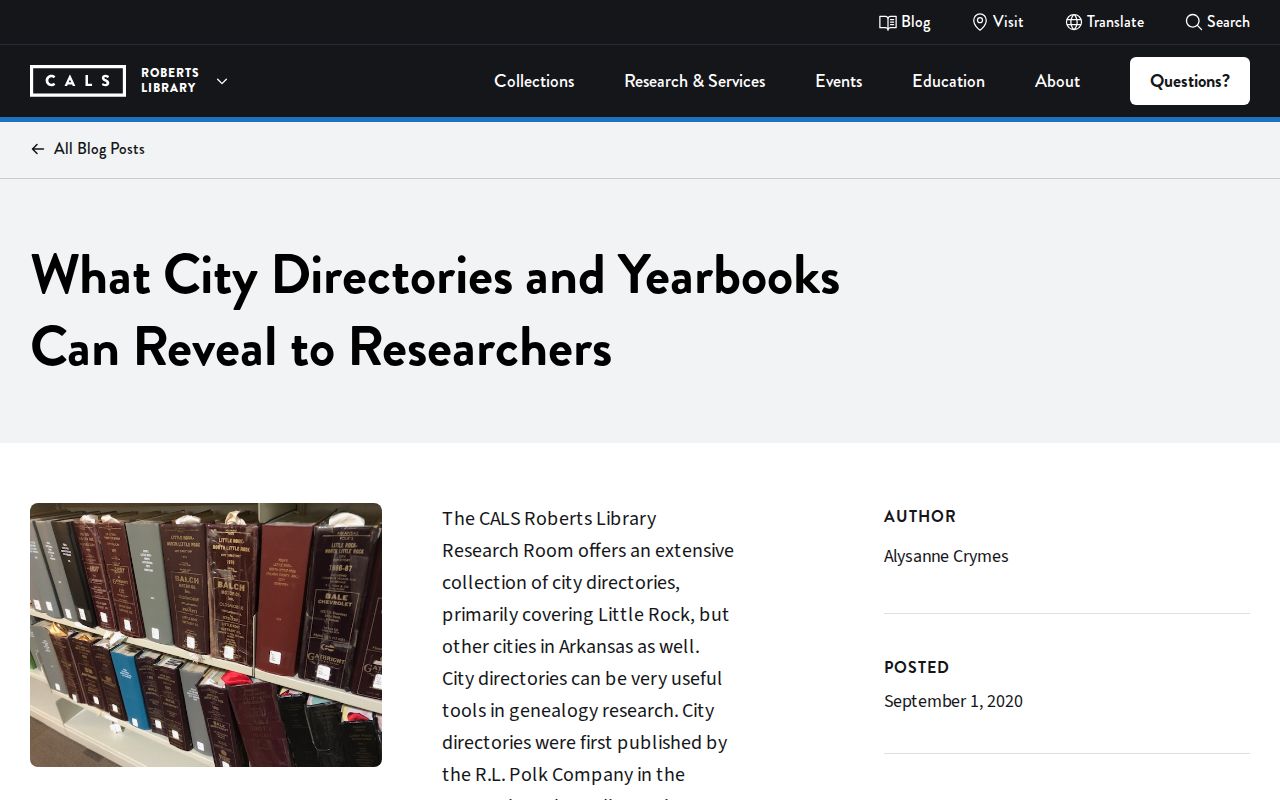
Roberts explains that directory entries can show names, addresses, and occupations, while yearbooks can identify classmates, teachers, clubs, and photographs. Exact Little Rock city-directory year ranges were not published in the official online text reviewed for this build, so the sound statement is that the collection is extensive and primarily Little Rock, not that it covers a precise first or last year.
| Collection | People It Can Name | Access Note |
|---|---|---|
| City directories | Past residents, heads of household, addresses, occupations, businesses | Roberts Library Research Room; exact year ranges not found online |
| Yearbooks | Students, teachers, clubs, teams, photos | Roberts Library and related local-history sources |
| Ancestry Library Edition | Census, immigration, church, burial, and family-history matches | CALS in-library access |
| Newspapers and obituaries | Marriage notices, probate notices, obituaries, community mentions | CALS, Roberts Library, and archive channels |
Historical Little Rock Directories
R.L. Polk city directories began in the 1870s, and Little Rock directory research often depends on comparing a name, address, and year across multiple sources. A city directory can place a person at an address. A reverse or criss-cross directory, when available, can start with an address and move toward an occupant. A yearbook can place a student or teacher in a school community. A newspaper notice can connect that same name to family, church, military, civic, or probate context.
- City directory
- A printed or filmed directory that can list residents, addresses, occupations, and businesses for a place and year.
- Reverse directory
- An address-first directory used to identify occupants or businesses tied to a street address.
- Yearbook
- A school source that may show names, class years, clubs, photos, teachers, and activities.
- Finding aid
- An archive description that points to collections, boxes, maps, photographs, letters, or record groups.
Older Little Rock directory searches also benefit from maps. UALR's Mapping Little Rock History, archived maps, and subdivision names from deed records help translate older place descriptions into current geography. For a past resident who was not an owner, city directories, yearbooks, obituaries, and cemetery records may say more than a deed index.
Little Rock Archive Directories
The Arkansas State Archives sits in Little Rock at 1 Capitol Mall and was created as the Arkansas History Commission in 1905. It preserves official state archives and historical material, with finding aids for Pulaski County and Little Rock. These are not simple people directories, but they point to named collections, maps, photographs, newspapers, county materials, and research services that can surface people missing from current web lists.
Cemetery and military sources extend that directory path. The Little Rock National Cemetery official page gives the federal cemetery context, while Interment.net has an established transcription for Little Rock National Cemetery. DD-214 military discharge records filed with the county are confidential with limited release, so older military research often belongs with NARA, the State Archives, or the cemetery source rather than a public county search page.
Little Rock Directory Search Tips
Directory names can vary. Try middle initials, married and maiden names, business suffixes, trust phrases, and misspellings. For people tied to property, search both the owner name and the mailing address. For people tied to a school or campus, start with the staff or university directory, then use department pages when a card is thin. For older residents, pair a city directory year with a census year, obituary, cemetery record, or deed chain.
Current phone data is the weakest official category. No official government white-pages directory was found for Little Rock. Use official staff pages, school and university directories, business filings, license rosters, and library city directories instead of treating scraped phone lists as source authority. Use any directory result for lawful personal research only, and do not use contact details to harass or harm anyone.
Note: Directory entries can be stale, especially when a person changes roles, moves, retires, or asks an office to update a listing.